Corporate events run on tight schedules, and food is rarely the headline. That changes fast when something goes wrong. A cold lunch during a board meeting or a delayed snack break in a daylong workshop can derail the mood faster than any technical glitch. That’s exactly why catering services for corporate events have become a planning priority for businesses across Mumbai, not an afterthought tucked in at the end.
Whether you’re organizing a quarterly review, a product launch, or an office anniversary, it helps to know what professional caterers actually do and how to plan around it. This kind of preparation saves you from last-minute scrambling. At Cater Spoon Mumbai, we’ve catered everything from boardroom lunches to large conference dinners, and the same principles keep coming up: clarity on numbers, the right menu for the occasion, and a team that handles execution so you don’t have to. This guide walks through exactly that, drawing on what most corporate hosts in Mumbai need to know before they book.
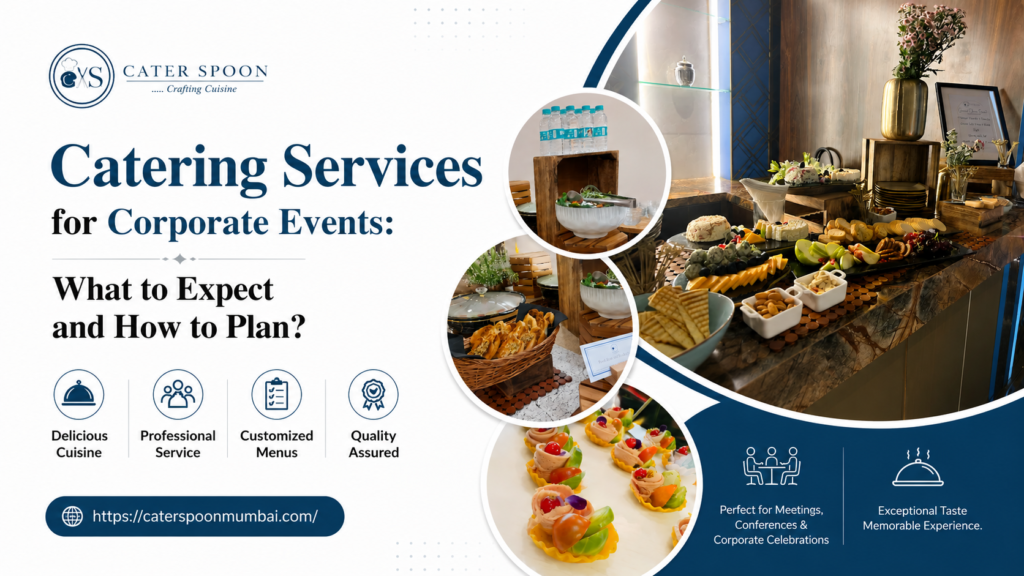
What Corporate Event Catering Actually Includes?
People often assume catering means “food gets delivered.” In practice, a proper corporate catering setup covers a lot more ground:
- Menu planning based on the event type, time of day, and guest profile
- Live or buffet service, depending on the format and headcount
- Serving staff trained to work quietly and efficiently around a business setting
- Setup and breakdown, including tableware, linen, and equipment
- Dietary accommodation: vegetarian, vegan, gluten-free, Jain, and allergy-specific requests
- Timing coordination with your agenda, so food doesn’t compete with the schedule
This is also where catering services for private events and corporate catering start to diverge. A private party has more flexibility on timing and menu experimentation. A corporate event has to align with an agenda. Speeches start on time, lunch breaks are short, and nothing can run over. Caterers who work corporate events regularly understand this difference and plan service speed accordingly, while still keeping the food quality and presentation high enough to reflect well on the host company.
Types of Corporate Events That Need Catering
Almost every kind of business gathering benefits from planned catering, but the requirements shift depending on the format:
Board meetings and client meetings usually call for a compact, polished spread. Think hi-tea setups, sandwiches, or a light working lunch that doesn’t interrupt conversation.
Conferences and seminars need catering that can serve a large number of people quickly, often across breakfast, lunch, and snack breaks, without slowing down the day’s agenda.
Product launches and brand showcases are where presentation matters most. Live counters, plated starters, and curated beverage stations help reinforce the brand experience guests are there for.
Training sessions and workshops typically run long, so the food needs to keep energy and focus up. Balanced meals work better here than heavy, sleep-inducing ones.
Office parties and celebrations, such as anniversaries, festive get-togethers, and year-end parties, allow for a more relaxed, indulgent menu. This is closer in spirit to catering services for private events, just scaled for a corporate guest list.
Recognizing which category your event falls into is the first real planning decision, because it determines portion style, service pace, and staffing.
How to Plan Corporate Catering: A Step-by-Step Approach?
Planning catering services for corporate events starts long before the event day. The right planning ensures smooth service, satisfied guests, and a hassle-free experience.
1. Lock the headcount and format early
Caterers need an accurate guest count to plan procurement and staffing. A buffet for 40 people and a seated lunch for 40 people need very different setups, so decide the service format (buffet, plated, live counters, or packed boxes) as early as possible.
2. Match the menu to the time and tone of the event
A morning training session needs a different menu than an evening client dinner. Energy-friendly options like fresh juices, light proteins, fruit, and balanced carbs work well for daytime sessions. Evening events can carry richer, more elaborate spreads.
3. Account for dietary diversity
Corporate guest lists are rarely uniform. Build in vegetarian, vegan, Jain, and allergy-conscious options from the start rather than treating them as an add-on, so no guest feels like an afterthought.
4. Decide how visible the service should be
Some events benefit from food that’s simply present and efficient, like packed lunches during back-to-back meetings. Others, such as client experience events or showroom launches, benefit from visible, theatrical service: live grills, chaat counters, or bartenders working a drinks station.
5. Confirm logistics: venue access, setup time, and equipment
Office venues often have restrictions, including limited kitchen access, elevator timing, and security clearances. Share these details with your caterer upfront so they can plan equipment, staff entry, and set up windows without surprises on the day.
6. Build in a buffer for timing
Corporate schedules slip. Speakers run over, meetings extend. Good caterers build flexibility into service timing so a 15-minute delay doesn’t mean cold food or a rushed buffet.
7. Do a final headcount and menu confirmation 48 to 72 hours out
Numbers shift as RSVPs come in. A short confirmation call closer to the event date helps avoid both food wastage and shortages.
What to Expect on the Day?
A well-run catering team for corporate events typically arrives well ahead of the start time to set up discreetly. Tables, linen, chafing dishes, and live counters are usually ready before guests notice anything happening. Service staff stay attentive but unobtrusive, refilling and clearing without interrupting conversations or presentations. Food is paced to match the agenda: tea and snacks during breaks, lunch when the schedule allows, and a clean wrap-up once the event winds down.
If something needs adjusting mid-event, whether it’s a delayed start, an unexpected extra guest, or a last-minute menu tweak, an experienced catering team adapts without making it your problem to solve. That’s really the value proposition. Catering should reduce your workload on the day, not add to it.
Why Businesses in Mumbai Choose Cater Spoon LLP For the Corporate Catering in Mumbai?
Cater Spoon LLP delivers reliable catering services for corporate events across Mumbai, from boardroom lunches and conferences to product launches and large-scale office celebrations. That range, from a 20-person client meeting to a multi-day conference, has shaped how our team approaches corporate catering services. Menus are tailored to the event’s purpose, staff are trained to work around business settings, and our planning process is built to handle Mumbai’s traffic, venue access rules, and tight office schedules.
We also bring genuine menu range to the table. Vegetarian, vegan, gluten-free, and international cuisines sit alongside classic Indian favourites, so a single event can serve a diverse guest list without anyone settling for a generic option. Our team handles everything from live cooking stations and bartending to packed lunches and full setup-and-cleanup, which means hosts can focus on the meeting, the launch, or the celebration itself instead of the logistics behind it.
The same care we bring to a 200-person conference applies to smaller gatherings too. Our work with catering services for private events, like house parties and birthday celebrations across Mumbai, uses the same standard for food quality and service, just adapted to a more personal setting.
Common Mistakes to Avoid When Planning Corporate Catering
- Underestimating headcount changes
Always build in a small buffer for last-minute guests. - Ignoring dietary diversity until the last minute.
This usually results in a thin, generic vegetarian option that nobody enjoys. - Choosing a menu that’s too heavy for working hours.
Rich, indulgent food mid-meeting can slow guests down rather than energize them. - Not briefing the caterer on venue restrictions.
Limited kitchen access or elevator timing can affect setup if not flagged in advance. - Booking too close to the event date.
Quality caterers in Mumbai get booked out during peak seasons, including festive months and financial year-end events, so plan at least 2 to 3 weeks ahead where possible.
Why Mumbai-Based Catering Matters?
Choosing a Mumbai-based catering partner isn’t just about convenience. It directly affects food quality and timing. Local caterers understand the city’s traffic patterns, venue-specific access rules (especially in business districts like Nariman Point, BKC, and Lower Parel), and which dishes hold up well during transport and service in Mumbai’s climate. A caterer who regularly works corporate venues across South Mumbai and the suburbs can plan delivery windows and set up more accurately than one unfamiliar with local logistics. That familiarity is ultimately what helps your event start and run on time.
Conclusion
Good corporate catering is felt more than it’s noticed. Guests remember a smooth, well-timed meal, not the planning that went into it. The difference between an average event and a polished one usually comes down to a caterer who understands both food and the rhythm of a business day.
If you’re planning your next office event, conference, or celebration, Cater Spoon LLP brings the menu range, service experience, and local Mumbai expertise to make it count, whether it’s a 20-person client lunch or a large-scale corporate gathering. Explore our corporate catering services in mumbai or get in touch to start planning your menu.